
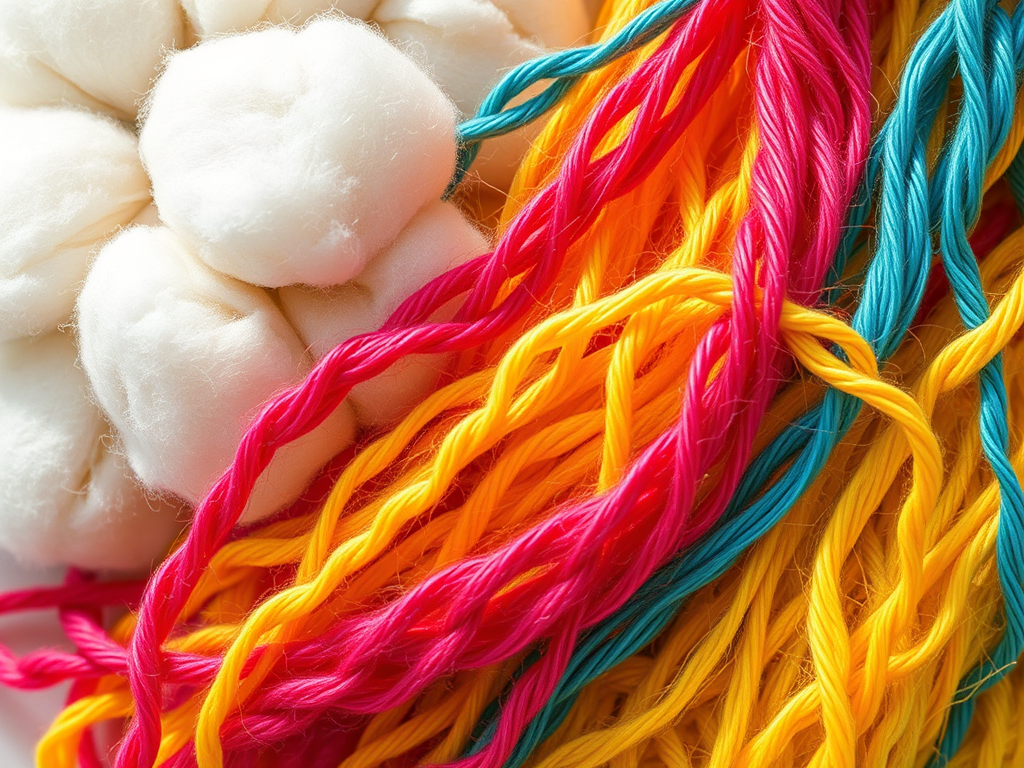
In this episode, I give a basic overview of fibers and fiber types. It is a basic, high level overview, just an introduction to the various fibers out there. In later episodes, I will get more in depth on each individual fiber type.
Transcript:
Hello! and welcome to another episode of Flying Under the Rug, with me, Dave Grigsby, the Flying Rug Guy. Brought to you today by Zerorez® of Idaho, call today or schedule online at zerorezidaho.com to get your carpets Insanely Clean! And if you’re in a different part of the country or England or Canada, visit Zerorez.com to find your local Zerorez® provider.
Ok, today, I want to talk about Fibers!
Fibers are the things that make up all kinds of fabrics; they are the stuff of fabrics. Whether you are talking about shirts, upholstery, rugs, carpet… Any of those things are made up of different fibers.
There are 2 1/2 basic types of fiber. The first ones are natural fibers, these are the ones that come from nature. You also have synthetic, these are made from plastics. And then there is the half one, these are regenerative or semi-synthetic fibers;
and they have a natural base, often made out a cellulose, and then chemically altered, and then made the same way that a synthetic fiber is. So they area natural base, but they’re synthetic, they’re made in the same way we make a synthetic fiber. And for cleaning purposes, for cleaning purposes, we care about that, we want to make sure that we’re treating them, if they’re a natural base, we want to treat them like a natural fiber.
Ok. All fabrics are made up of the three different types of fibers, so all fabrics are made up of one or more of those different kinds of fibers that are out there. The weave is not the fiber type. I often get that question. If I ask the question “what is your couch made out of?” “what is your carpet made out of?” “well it’s berber” or “it’s chenille” or “it’s satin.” Those are not fabric types, those are how the carpet is made, or how the couch is made. That just tells me what the weave [construction] is. All of the different fibers can be made into all of the different weaves [constructions] some with better or… or… a lower degree of success, but all of these fabrics, all of these weaves can be made out of these basic kinds of fiber. Microfiber is another one that I get asked, or I get told a lot; Microfiber is again talking about the denier, so it’s talking about the thickness of those fibers, the width of the individual filaments. Microfiber is very very small, and that is why it is called micro- fiber. Usually made out of a polyester or a nylon.
OK. In this video I’m just going to do a brief overview of the different fiber types and the fibers that we find in those fiber types, and then I’ll have more videos later on talking about each individual fiber, talking about the pros, the cons, the good things the bad things and some of the things we need to look out for when cleaning them. And, what’s really cool about fibers is when you understand the fiber, you understand how to clean it. And it doesn’t matter if you’re talking about in a rug, in a carpet, in upholstery, in your clothing, whatever it is, if you understand the fiber you know how to clean it. There are some things I want to… caveat to that: I’ll throw a caveat in there, you do have to understand the weave, because like a velvet, there’s specific ways to clean the velvet so that the velvet doesn’t get ruined.
Ok, let’s talk about natural fibers first. There are basically two types of natural fibers, there’s really three, but the third one is mineral, and we don’t, it’s rare to see that, it’s super, super rare. We’re talking gold, silver. That’s very rare to find. So in most things, we’re going to be looking at our protein fibers. Protein fibers come from animals, protein=animals, kind of makes sense. Those are going to be wool and silk. Wool comes from the hair of animal. Usually when we’re referring to wool, we are thinking about a sheep, but it could mean alpaca, it could mean llama, it could be mean camel, rabbit, any of those. Now there are specific names for each one of those as well, but for the purposes of this discussion we’re talking about wool. And it’s any animal fiber, we’re going to treat it all pretty much the same way. Silk, it comes from silk worms, it comes from the cocoon of the silk worm and it’s very fine, it’s very thin, but also a protein based fiber, and so we need to make sure that we’re treating it as a protein based fiber. Cellulosic fibers, on the other hand, come from plants. There are three different places that cellulosic fibers come from: seeds or fruits- that would be like cotton, the fluffy white stuff from cotton comes from the seed pod of the cotton plant. Coir or Coir, that comes from the coconut husk, that’s the fibrous stuff on the coconut. Bast fibers come from the stalk of the plant. Linen, jute, hemp, ramie, all of those come from the stalk of the plant, and those are very similar to grasses. They are actually different kinds of grasses. And then the last one are leaf fibers and so these fibers are coming from the leaves of the plants, and that would be like sisal or agave. There are lots of different kinds of plants out there. Some plants, like the banana plant, you can get bast fibers and leaf fibers from it. So there’s a lot of different options that we can go from there. We do have to treat them all pretty much the same way, there are some specific considerations that we take care of, or take into consideration when we’re looking at the bast fibers versus the leaf fibers versus the seed fiber.
OK, now we’re going to go into the synthetics, these are the ones we see most often because they are everywhere. They’re in our clothes, they’re in our carpets, they’re in our upholstery; all over the place. These are made from plastic, and they’re made through a process called extrusion. The process of extrusion, they take a big vat, they take a big pot of plastic, they melt it down, and then they force that plastic through it looks almost like a showerhead, like a big shower head, and as it’s almost like play dough being squeezed through one of those play dough thingys, the line come out, the fibers come out, and as it comes out it cools and hardens and turns into a plastic fiber. There are really four different kinds of these plastics. You’ve got Nylon, now in nylon there are two different kinds of nylon and there are several different generations or variations of those nylon fibers. But those nylon fibers are really good because they’re flexible the withstand a big beating, they’re strong, I mean, they’re a really good fiber. Polyester is another one, and that is often seen as PET, so you’ll see it on clothing as polyester, on carpets you’re going to see it as PET that stands for polyethylene triethylen [terephthalate], try saying that five times fast! It doesn’t mean that it’s pet friendly, it just means that it’s a plastic. In the polyester family, we also have something called Triexta, and Triexta is made from corn, it’s from the ethanol from corn, and so it’s a byproduct of that. It’s still a polyester, we treat it like it’s a polyester, but it’s Triexta. Ok, another one that we see quite a bit is polypropylene and olefin. They are one and the same. Polypropylene and olefin are interchangeable words. In the carpet industry, we talk about polypropylene as being foundation fibers they are the ones making up foundations, the backing of carpets, whereas olefin might make up the face yarns. But they are pretty much the same. And then the last one is acrylic, and we see that mostly, maybe in a rug, maybe in upholstery and in some clothing items.
All right, let’s get on to the semi synthetic or regenerative. They are typically made with a cellulosic base and when I say cellulosic base, I mean it could be bark, it could be leaves, it could be the actual fibers, it could be a whole bunch of different things. And, what they do is they take this stuff, they grind it up, they take all of this plant matter, imagine going into your yard and raking up a big pile of leaves and then they take that big pile of leaves and they run it through a shredder, and then they douse it in really, really strong chemicals. And that will melt the cellulosic material down into a liquid, and then they will extrude that, and that’s why it’s a semi-synthetic fiber. It’s got a natural base, it’s got that cellulosic base, but then they extrude it into an actual fiber. We call it the sausage of the fiber world. Rayon is the big name that is out there in terms of regenerative fibers. There are two different kinds of rayon, one is called viscose, another is called acetate. And they have all kinds of funny names that go with them. If you ever see a funny name on your clothing, if you see, like, Lycocel, or Luxcelle, or faux silk, those are all rayon. Viscose is made with really strong alkaline chemicals, and acetate is made with really strong acidic chemicals, and so they melt that down and turn it into whatever they’re going to make it. This one is also very popular, and for cleaners, that’s an unfortunate thing. Rayon is not a good fiber as far as its durability. It’s really soft, they call it fake silk or faux silk in a lot of cases, but it is not silk. Just a quick word, if you ever see that on, if you see the word “silk” with something else in front of it or maybe behind it, but in front of it, so, faux silk, bamboo silk, banana silk, art silk, artificial silk, any of those kinds of things, they’re talking about rayon, it’s a cellulosic fiber.
Ok, I… that’s it, those are the basic fibers, so again, you’ve got your protein, your cellulosic fibers on the natural side of things, you’ve got your synthetics, your nylons, polyesters, polypropylene, acrylic. And then you’ve got your regenerative or semi-synthetic fibers. When you understand what you’re dealing with, it makes it a lot easier on “how do I, how do I take care of this? How do I clean it up? If there is something on it, what do I need to look out for?” So, now that we understand those basic things, the next videos will go through your specific fiber types and how do I figure out which one do I have? Sometimes, it’s as simple as looking at the tag. Sometimes, you actually have to test it and try and figure it out. Ok, again, thank you for joining me on the Flying Under the Rug Podcast, if you have any questions, comments, concerns, any of those kinds of things, please, let me know! Put it in the comments, don’t forget to subscribe, like the video, share it with your friends or family members. If you’ve got a carpet cleaning professional or other cleaning professional, help them understand what they’re doing a little bit better. You spend a lot of money on your fabrics, let’s take care of them, the right way. All right, thank you so much! Have a great day!